
Flatbed Wrecker
The vehicles you need to transport determine deck dimensions, loading angle and payload. Check axle reserve, winch duty and restraint points as well as access along the route.
- Flatbed Length
- 5000–8000 mm
- Flatbed Load Capacity
- 5 t
- Winch
- 4–15 t
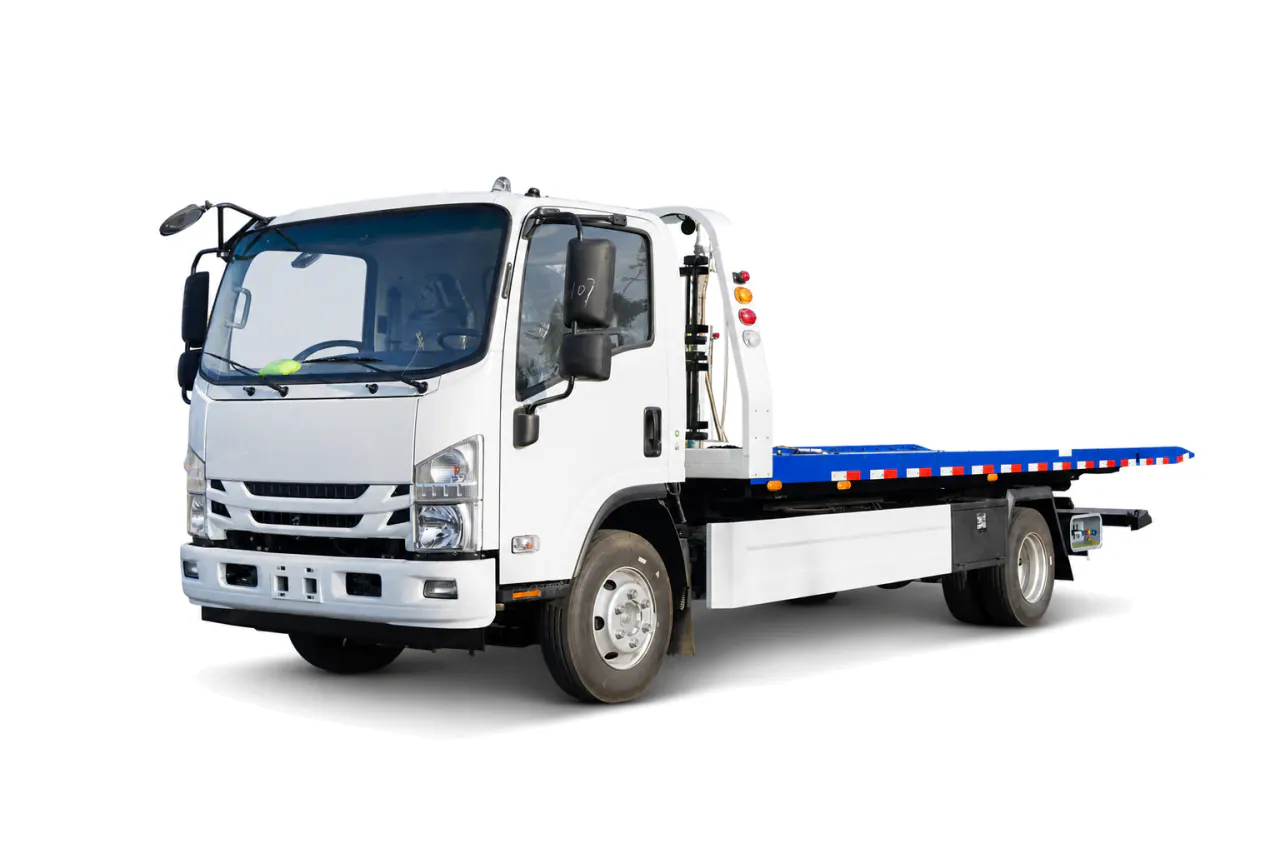 Front three-quarter view of the flatbed wrecker, showing the blue-edged recovery deck and white cab (1 of 6)
Technical specifications
| Item | Value |
|---|---|
| Body and layout | |
| Flatbed Length | 5000–8000 mm |
| Equipment and published ratings | |
| Flatbed Load Capacity | 5 t |
| Winch | 4–15 t |
| Rear Tow Boom | 2.5–15 t |
| Operation Type | Dual-side linkage operation |
| Loading Configuration | Standard / Full Drop |
Published configuration range · Data sheet v1.1 · Source checked · Supporting documents
Deck, loading path and restraints
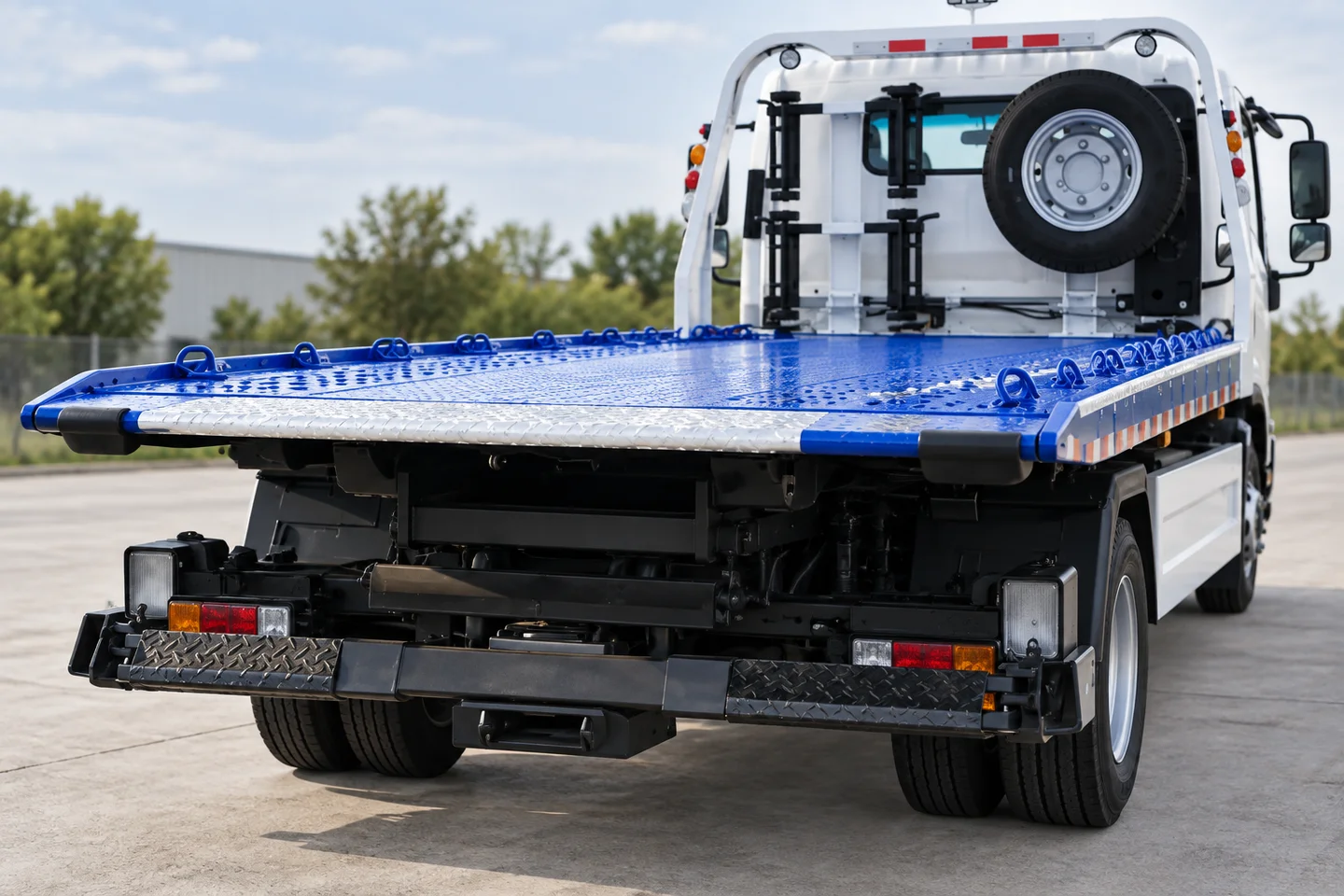
Typical work
- Roadside vehicle recovery
- Municipal fleet transport
- Workshop and contractor recovery
Configuration details
- Deck length, width and tilt angle
- Winch line pull and cable storage
- Wheel-lift or auxiliary gear
- Payload, axle loads and route rules
- Casualty and load case
- Describe the target vehicles, axle loads, recovery sequence and restraints.
- Recovery body and equipment
- State deck length, underlift, boom, winch, crane, rigging and control requirements.
- Setup, route and traffic
- Map setup ground, traffic space, route, braking and deployment footprint.
Acceptance requirements
- Reconcile winch, boom, underlift, deck, restraints and accessories to the approved load-case schedule.
- Witness the agreed functions and safety devices without treating a demonstration as a universal capacity proof.
- Record completed-vehicle mass, axle loads, rated documentation, controls, manuals and exceptions.
Build and inspection
Final dimensions, installed equipment, route suitability and acceptance records are confirmed for the selected project.
Loading and carrying vehicles
When is full-deck transport appropriate?
Check the disabled vehicle's condition and towing instructions. Full-deck transport may suit vehicles whose wheels should remain off the road during recovery.
Will the vehicle fit during loading as well as on the deck?
Check the tyre positions and restraints through the complete loading path. A vehicle that fits on the parked deck may still need a different loading arrangement.
How do deck payload and winch pull differ?
Deck payload is the carried load. Winch pull describes the pulling duty, so each rating needs its own check. An unloaded deck test demonstrates movement; request the agreed loading records to verify carrying capacity.
Is a wheel lift supplied with the flatbed?
Only if it is listed in the selected equipment schedule. Include any wheel-lift accessories in the packing inventory alongside loose ramps and recovery tools. Give the carrier the completed truck dimensions when agreeing handling.
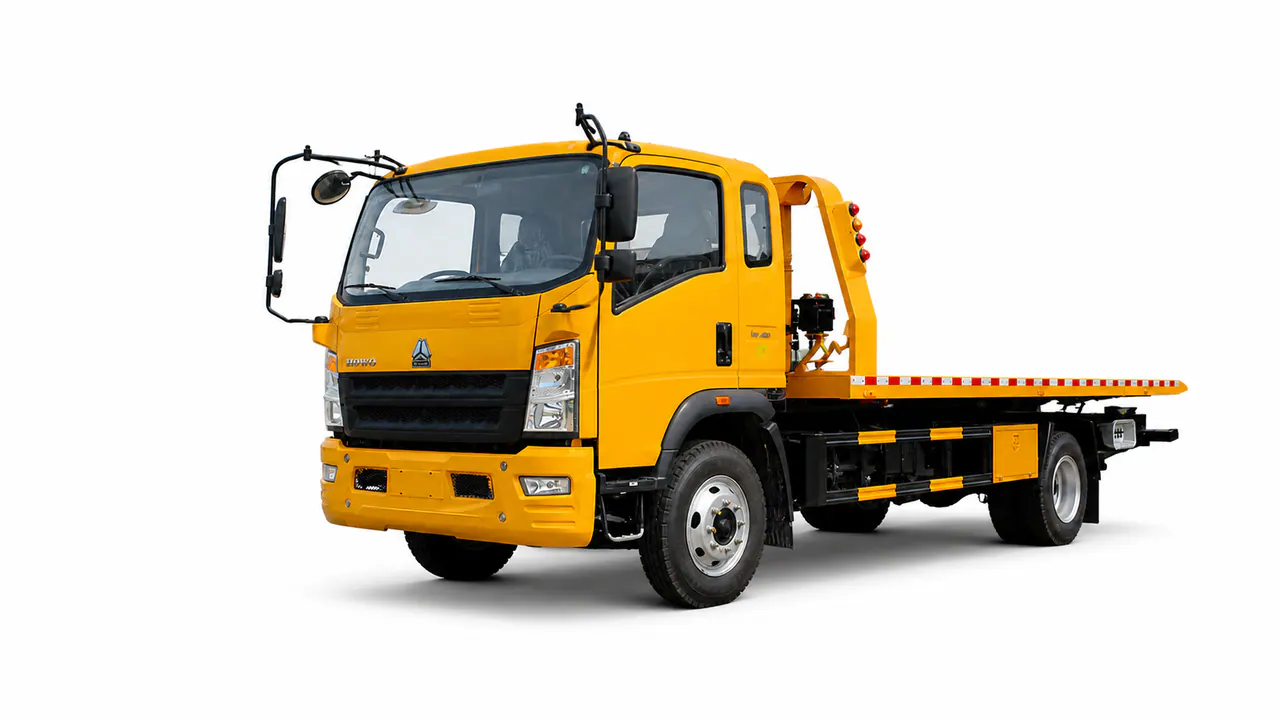
Buyer guides
Choosing a road recovery vehicleChoose a recovery vehicle for the casualties and load cases it must handle. Review route and setup limits, with suitable rigging and restraints supported by agreed demonstrations.Comparing vehicle suppliers and quotationsCompare vehicle quotations against one operating duty and scope. Examine the evidence and exceptions, and clarify who handles destination requirements and after-sales support.Specify your Flatbed Wrecker
Share the operating duty, destination and equipment requirements.