
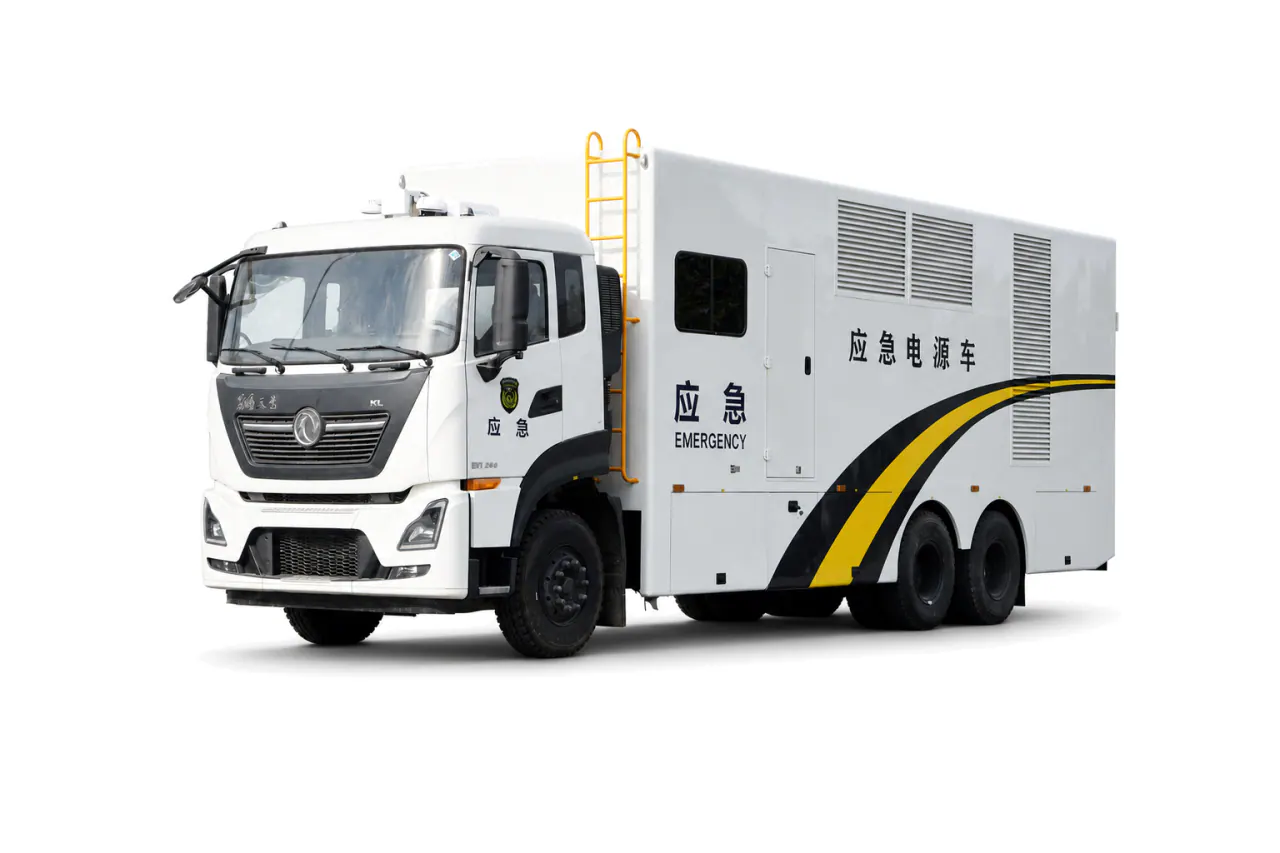
Emergency Power Supply Truck
Critical-infrastructure outage support. Remote power supply.
- Generator Power
- 65–450 kW
- Body Material
- Cold-rolled steel sheet
- Frequency
- 50 / 60 Hz
Choose a power, drainage or workshop vehicle for the work it must sustain. Compare electrical load, pumping duty or repair scope with deployment time and site access.
Prepare a configuration brief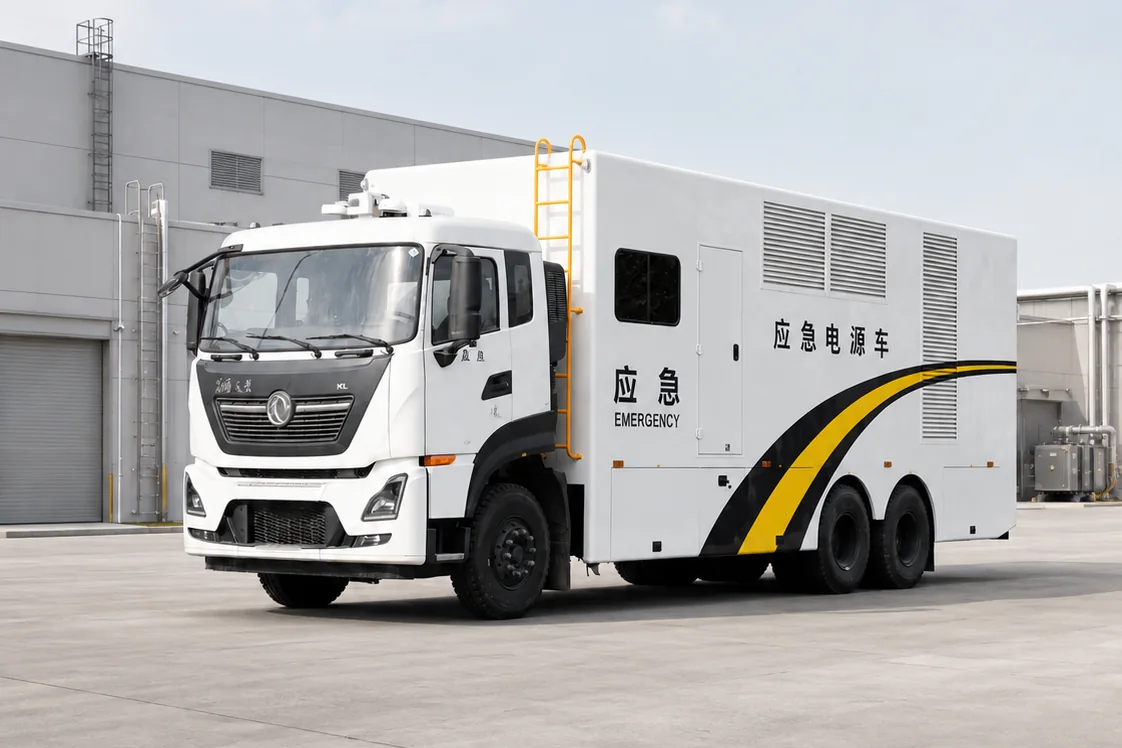
Compare the operating roles and published values below. The selected chassis, equipment and working conditions define the specification for your order.
Critical-infrastructure outage support. Remote power supply.
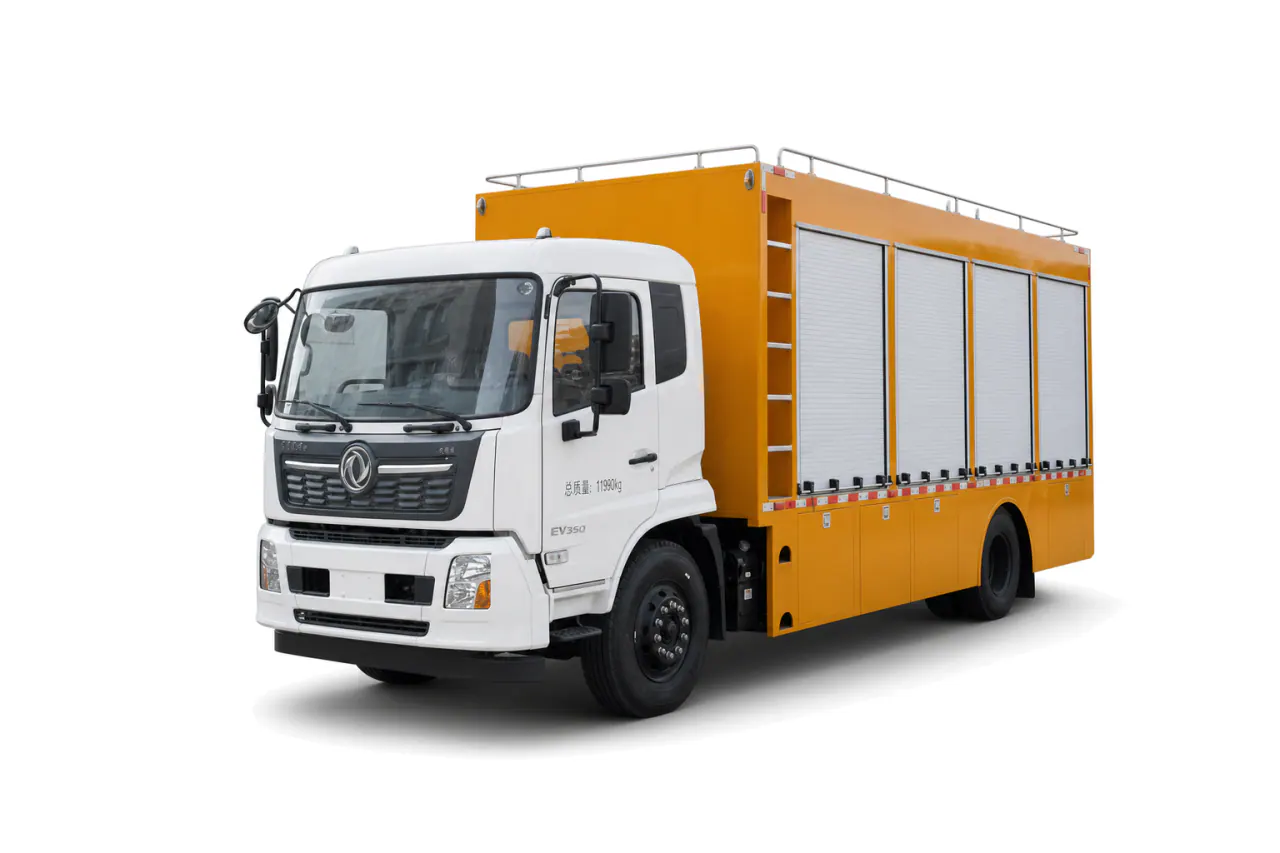
Urban floodwater removal. Storm-site dewatering.
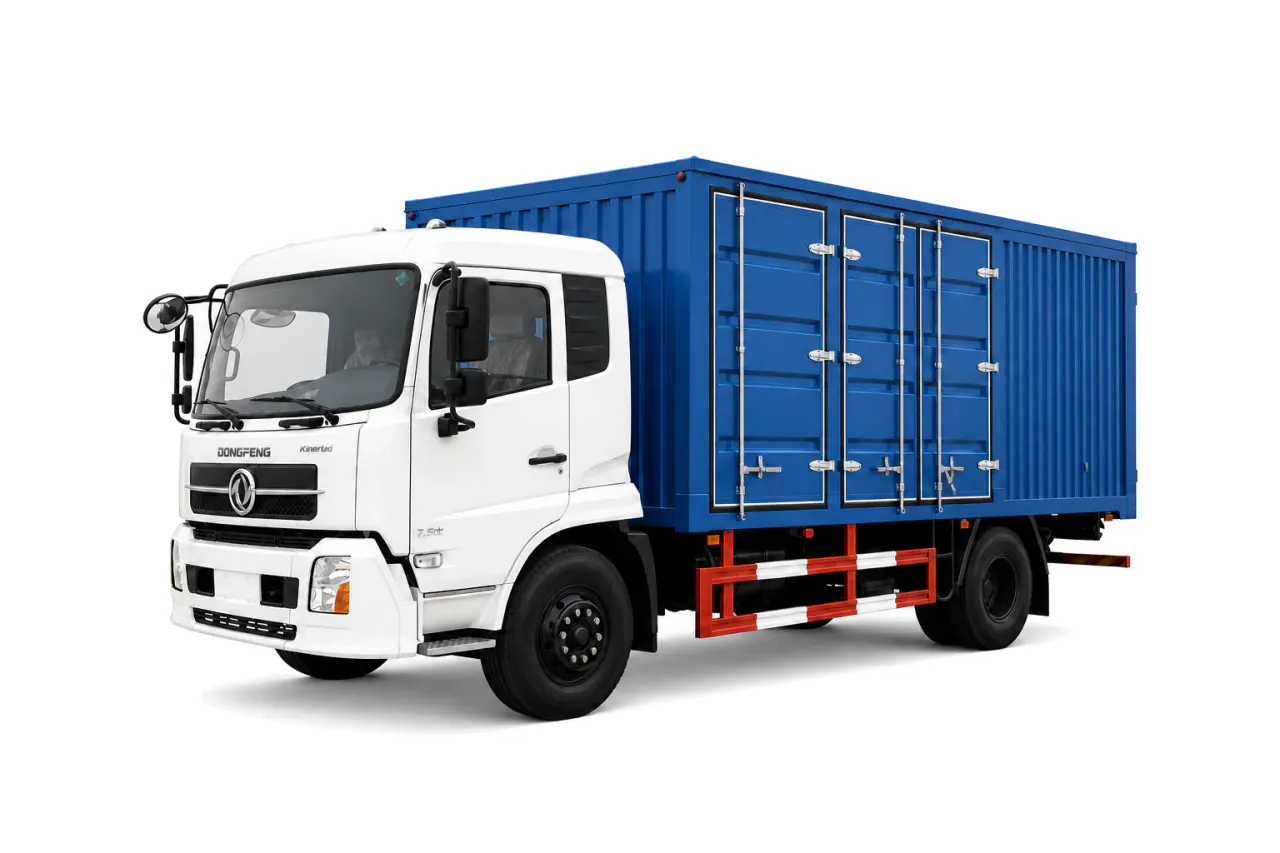
Remote fleet repair. Disaster-site maintenance.
| Vehicle type | Operating roles | Configuration focus |
|---|---|---|
| Emergency Power Supply Truck | Critical-infrastructure outage support; Remote power supply; Extended disaster operations | Continuous, intermittent and starting loads; Voltage, phase and protection |
| Mobile Drainage Pump Truck | Urban floodwater removal; Storm-site dewatering; Remote pumping operations | Delivered flow at total dynamic head; Solids, sediment and contamination |
| Mobile Workshop Truck | Remote fleet repair; Disaster-site maintenance; Utility and infrastructure support | Repair tasks and tool schedule; Workshop length and access |
Lift and friction affect flow, which also depends on hose size, solids and discharge conditions.
Starting loads, continuous loads, fuel, cooling and distribution determine usable output.
Tools, parts, work positions and maintenance access affect how long a team can remain deployed.
A support vehicle needs a defined job at the incident site. For a power truck, prepare an electrical load schedule. Specify drainage flow at total dynamic head and describe the water condition. A workshop brief should identify the repairs the field team will perform and the tools and services needed.
The equipment must sustain that work for the planned deployment. Allow for setup time and runtime, with fuel and ventilation suited to the duty. Cable and hose arrangements affect access and maintenance. A maximum generator or pump rating is not a confirmed operating duty: the receiving site and connected loads need assessment, including losses and any equipment running simultaneously.
Use the RFQ to distinguish included equipment from optional alternatives. Define an operating test for the arrangement selected. Qualified reviewers still need to assess electrical connections and water discharge for the project, along with specialist tools. Site safety and destination compliance also need their review.
Typical buyers: emergency-management teams, utilities, infrastructure owners and response contractors.
Choose support equipment for the work it must sustain at the site. Specify drainage flow at total dynamic head, or provide connected and starting loads for a power truck. For a workshop, describe the repairs and tools needed over the expected deployment time.
What to provide: State flow at total dynamic head, intake, solids, hose route and outfall.
What to retain: Pump curve or duty record, hose and coupling schedule, guarded intake and test setup.
What to provide: List connected loads, starting sequence, runtime, cable route and protection.
What to retain: Load schedule, generator/controls identity, protection test and runtime record.
What to provide: Define repairs, crew, tools, consumables, storage and service interval.
What to retain: Body layout, equipment inventory, access review and handover documents.
Bring the duty, route, crew and equipment requirements together. Send the brief to our team to discuss the configuration.