
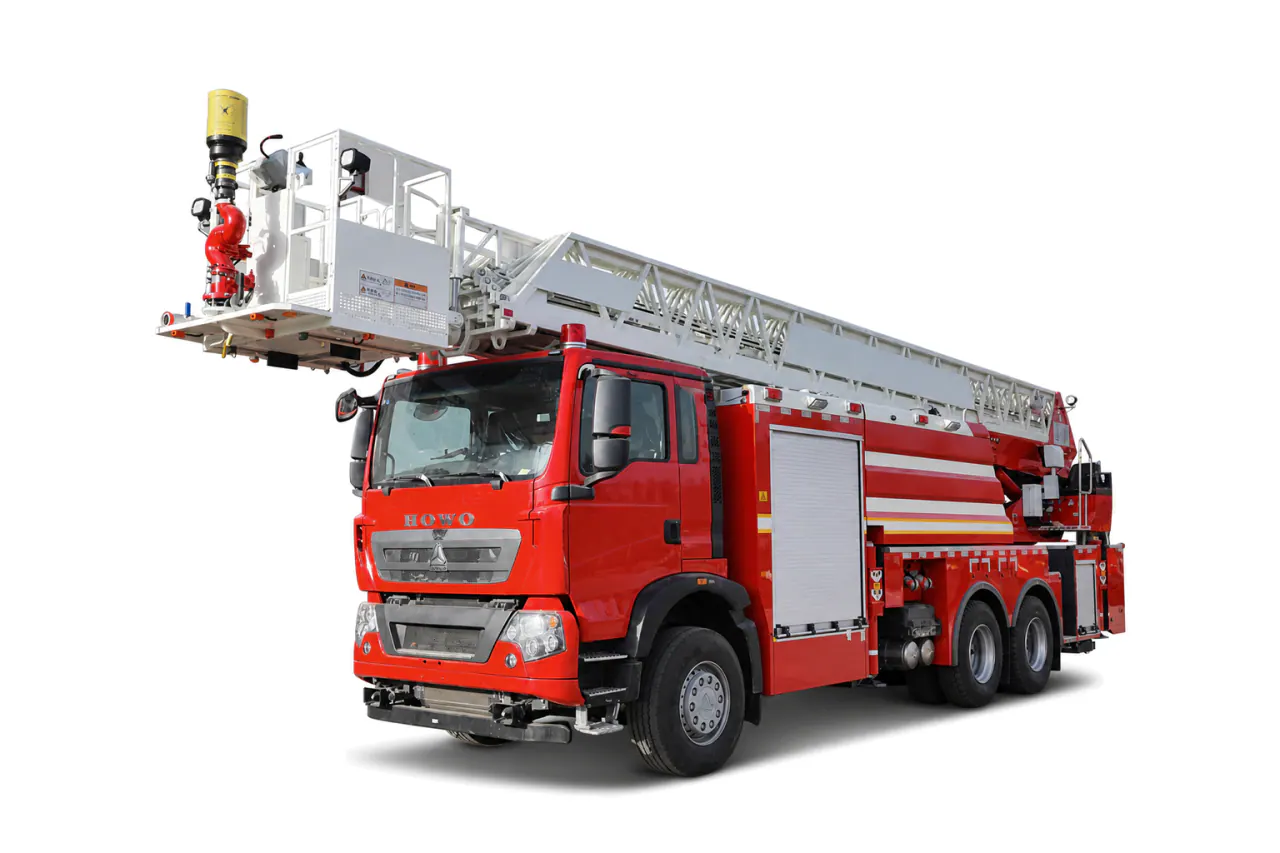
Aerial Ladder Fire Truck
Compare reach at the required load with building access and stabilizer reactions. Specify emergency functions and the required pump, waterway and monitor duty for the aerial ladder fire truck.
Match elevated rescue vehicles to the building and required work position. Check reach at the intended load, then setup ground and access, with any fire-waterway duty specified separately.
Prepare this mission briefStart with the main job the vehicle must do. Include supporting vehicles when the response plan gives them a specific role.
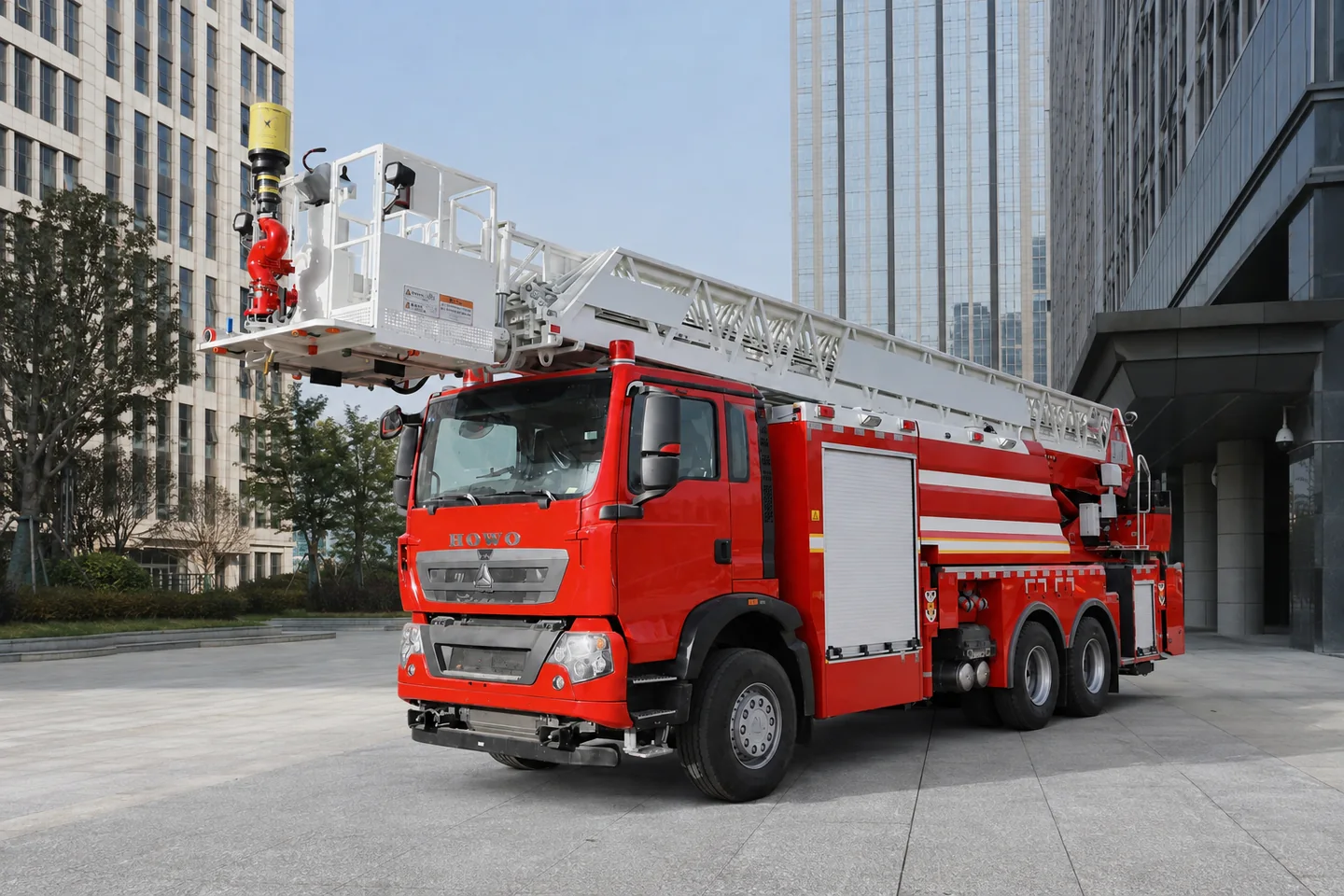
Compare reach at the required load with building access and stabilizer reactions. Specify emergency functions and the required pump, waterway and monitor duty for the aerial ladder fire truck.
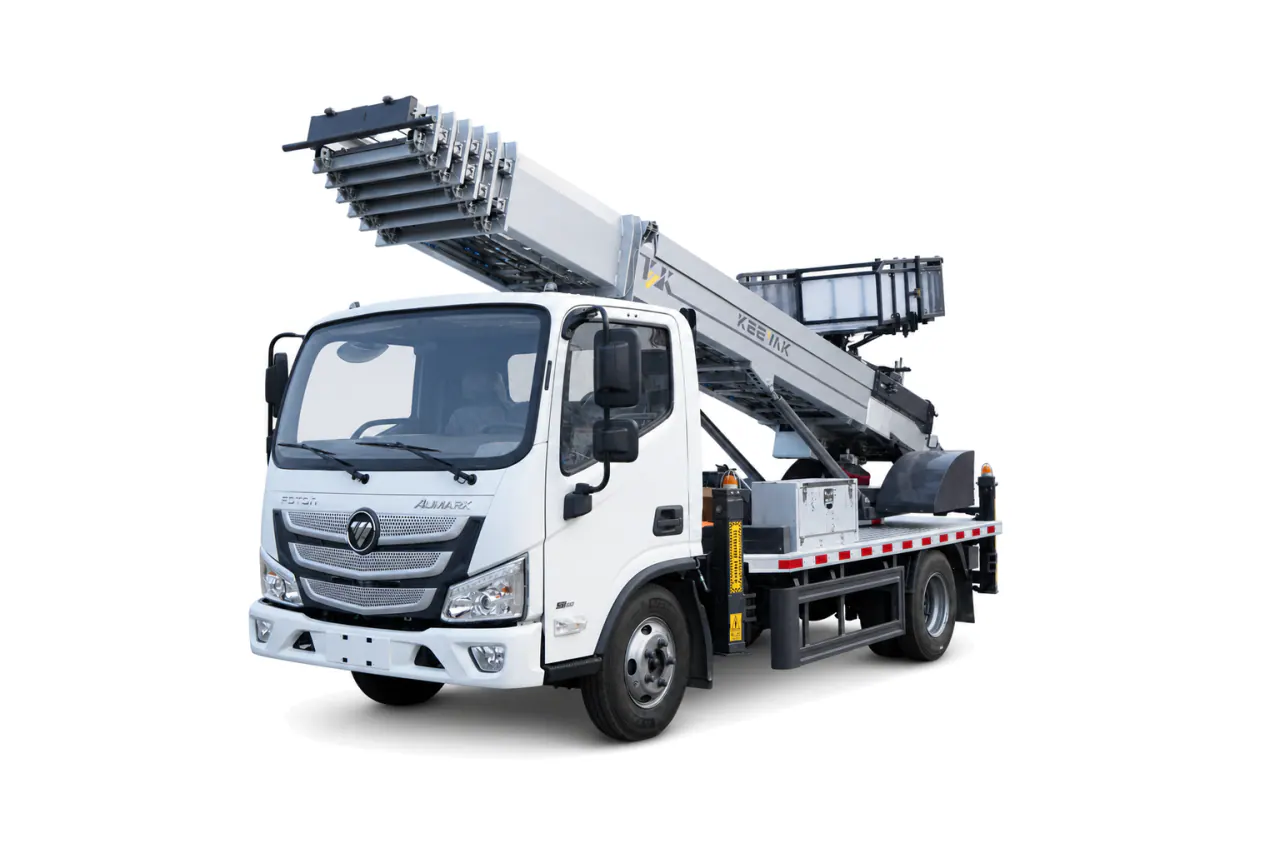
For building access or evacuation, compare ladder geometry and load with the available setup ground and transport route. A truck-mounted aerial ladder does not necessarily include a fire waterway.
Map the required work point and horizontal outreach, with the basket load and ground space available for setup. Include an aerial platform or ladder only if its working envelope and operating safety method suit the task.
| Decision | Why it matters | What to provide |
|---|---|---|
| Access geometry | Height alone does not show whether the platform can reach around the building or obstacle. | Provide work points, outreach, obstacles, load and tools.Retain: Working-envelope chart and position checks. |
| Setup and ground | Stabilizer spread, slope, ground reaction and traffic space control deployment. | Map the setup footprint, access route and emergency-lowering needs.Retain: Stabilizer arrangement, site assumptions and safety checks. |
| Intended use | Utility access, firefighting and rescue may need different equipment and procedures. | Name the intended duty and destination operating rules.Retain: Duty-specific equipment, procedure and acceptance record. |
Mark the work or rescue position on the building before comparing aerial vehicles. An aerial ladder fire truck combines access with firefighting when its pump, waterway and monitor are specified. A truck-mounted ladder can provide access without a fire waterway. For telescopic or articulating platforms, check both the working envelope and intended use against the task.
Read the working chart at the planned basket or ladder load, then compare stabilizer reactions with the ground capacity. Check emergency lowering and the space needed to deploy at the building, as well as clearance along the access route.
Choose equipment for the agreed work, then specify its connections and the records needed to check it.
Use these steps to prepare the configuration and acceptance brief, not as a field operating procedure.
Map the target floor, work point, setback and obstacle geometry.
Define occupants, tools, basket load and evacuation method.
Read the working chart at those conditions.
Check setup surface, ground reactions, traffic space and route clearance.
Witness reach, controls, interlocks, emergency lowering and any specified waterway duty.
This example supports planning; it is not a standard high-rise rescue package. Review the buildings and crew method, then check access roads and setbacks. Use those requirements to choose vehicles and quantities, accounting for water supply and destination rules.
Add these vehicles only where the response plan identifies a separate duty.
Emergency Command VehicleClass B Emergency Monitoring AmbulanceUse only where the intended task, equipment configuration and operating conditions are documented.
Telescopic-Boom Aerial Work Platform TruckArticulating-Boom Aerial Work Platform TruckReview the relevant selection and procurement guidance before finalizing the brief.
Elevated Rescue and Utility Access SelectionChassis, GVW, Axle Load and Payload PlanningBring the operating duty, equipment scope and destination requirements into one configuration brief.
Send your mission requirements to our team.