
Emergency Power Supply Truck
Use the electrical load schedule to specify voltage, protection and runtime. The power truck also needs suitable distribution connections, ventilation and fuel provision, with load-step tests agreed before acceptance.
- Generator Power
- 65–450 kW
- Body Material
- Cold-rolled steel sheet
- Frequency
- 50 / 60 Hz
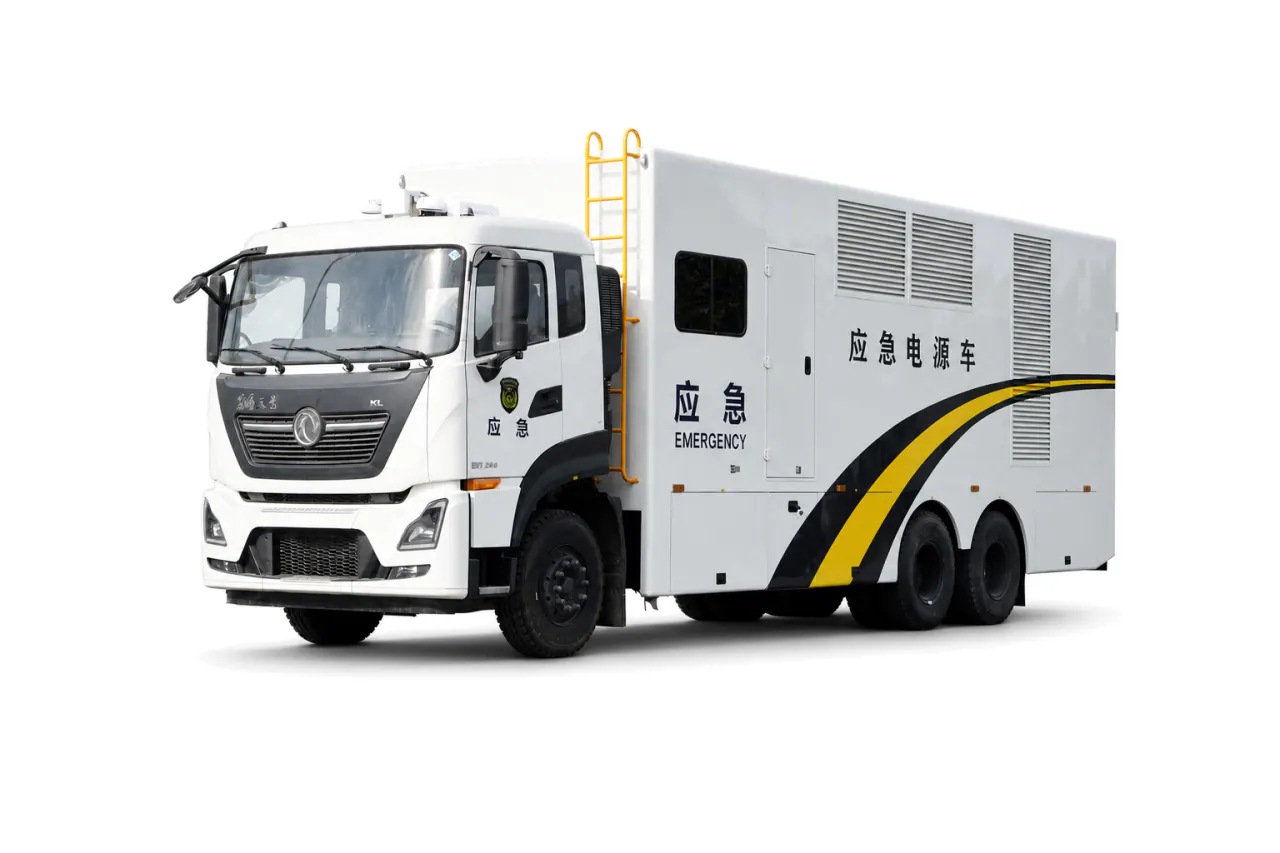 Front three-quarter view of the emergency power truck, showing the ventilated equipment body and yellow access ladder (1 of 6)
Technical specifications
| Item | Value |
|---|---|
| Body and layout | |
| Body Material | Cold-rolled steel sheet |
| Equipment and published ratings | |
| Generator Power | 65–450 kW |
| Frequency | 50 / 60 Hz |
| Continuous Operating Time | 8–48 h |
| Power Output Type | Cable Output / Distribution Cabinet / Cable + Distribution Cabinet |
| Rated Output Voltage | 400 / 415 / 440 V |
Published configuration range · Data sheet v1.1 · Source checked · Supporting documents
Electrical supply and distribution
Typical work
- Critical-infrastructure outage support
- Remote power supply
- Extended disaster operations
Configuration details
- Continuous, intermittent and starting loads
- Voltage, phase and protection
- Fuel, runtime and ventilation
- Load-step acceptance record
- Hydraulic duty
- State flow at total dynamic head, intake, solids, hose route and outfall.
- Power and runtime
- List connected loads, starting sequence, runtime, cable route and protection.
- Field service
- Define repairs, crew, tools, consumables, storage and service interval.
Acceptance requirements
- Reconcile installed equipment, rated interfaces, cables, hoses, controls and loose items to the approved schedule.
- Witness the specified duty point or load schedule with identified instruments and retained results.
- Record completed-vehicle mass, axle loads, drawings, manuals, safeguards and exceptions.
Build and inspection
Final dimensions, installed equipment, route suitability and acceptance records are confirmed for the selected project.
Generator sizing and connections
What information is needed to size the generator?
Provide the starting demand and operating load profile, together with the required duration. A steady load total misses the starting requirement. Select the generator and distribution system for that duty; body material does not determine electrical capacity.
Will it connect to the receiving installation?
A qualified reviewer must check that installation's connections and protection arrangements. Mobility does not make the generator compatible with every installation.
What should an output test demonstrate?
Use results that identify the agreed electrical test conditions. A video of the engine running without electrical load does not demonstrate the required supply duty.
Are cables and distribution accessories supplied?
Ask for an itemized schedule of cable lengths and connectors, including loose distribution equipment. A generator description alone does not define the complete connection package.
How is it prepared for sea transport?
Confirm fuel and battery preparation with the supplier and carrier. Record the supplied electrical accessories for checks on arrival.
Specify your Emergency Power Supply Truck
Share the operating duty, destination and equipment requirements.