
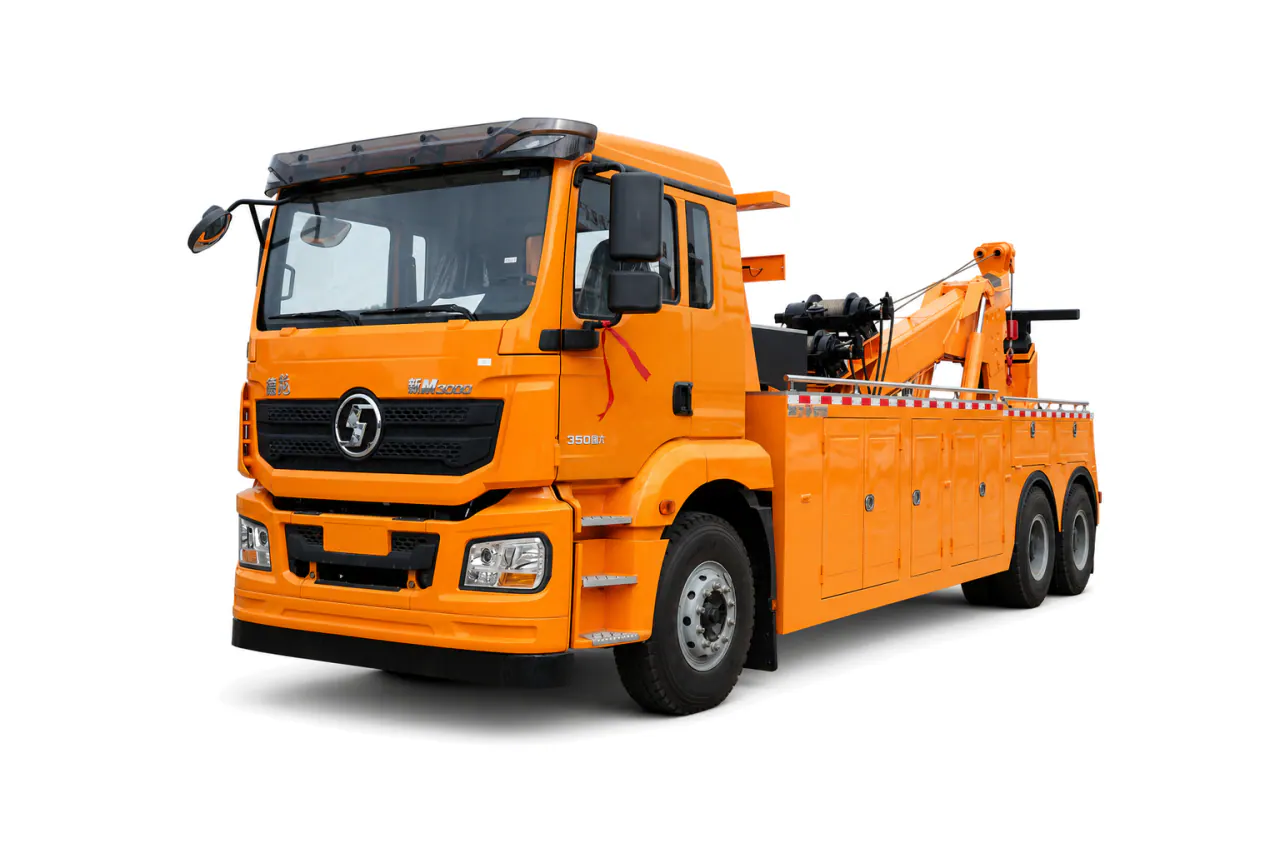
Which recovery system fits the disabled vehicle?
Choose a road recovery vehicle by defining the casualty and the recovery sequence first. Deck, towing, boom, underlift, winch and crane capacities describe different functions, so compare each one against its own load case.
Describe the vehicles to be recovered
List the passenger, commercial, bus, municipal or industrial vehicles the recovery unit is expected to handle. Record mass range, wheelbase, axle position, ground clearance and likely damage conditions. A disabled vehicle that rolls freely presents a different task from a rollover, locked axle or vehicle below road level.
For each case that determines the vehicle specification, work through the approach and stabilization, then any lifting or winching. Continue through loading, restraint and transport. Use that sequence to identify the body type and equipment required.
Match the recovery method to the body
A flatbed wrecker supports controlled loading and transport. An integrated wrecker combines towing, lifting and winching functions. A rotator adds a rotating boom for heavy or difficult recovery geometry. A pickup tow truck can suit lighter urban work where maneuverability and setup space are priorities. A crane-assisted flatbed adds material-handling capability with a separate crane chart.
Keep deck and towing ratings separate from the underlift, boom, winch and crane ratings. Each describes a different function. Request the rated condition, geometry and limits for each one rather than adding the figures together.
Check chassis, route and setup
Calculate completed mass and axle loading with the body and hydraulics installed. Include tools and rigging, then the crew and casualty load. Check road and bridge limits against the transport height and turning radius, with gradients and braking requirements considered. At the scene, establish the shoulder width and slope. Check stabilizer spread against ground capacity and the space needed for traffic control.
Loading geometry also matters. Compare deck length, width, tilt angle, transition, winch line and target vehicle clearance. For towing, review wheel-lift or underlift interface, overhang and axle load transfer.
Information to include in the RFQ
- Target casualty classes, dimensions and mass range
- Recovery and transport sequence for the controlling cases
- Separate deck, tow, underlift, boom, winch and crane requirements
- Route, ground, traffic and setup constraints
- Rigging, restraints, tools, warning and lighting equipment
- Required drawings, load charts, demonstrations and records
Inspection and acceptance
Match the finished vehicle to the approved equipment schedule and latest drawing. Witness the agreed loading, towing, lifting or winching functions under stated conditions. Verify controls, warning systems, restraints, rigging inventory and safety features. Record the test setup and result against the vehicle identity.
Read each capacity against its rated condition
KEEYAK’s capacity guide separates figures often grouped under one tonnage label. Ask which rating the supplier means. [4]
| Rating | Information to obtain |
|---|---|
| Deck carrying capacity | Load distribution, usable deck dimensions and remaining completed-vehicle payload. |
| Winch pull | Winch identity, rope specification, rope layer and stated pulling condition. |
| Underlift or wheel-lift load | Supported load at the required reach, attachment and operating position. |
| Towed mass | Manufacturer’s towing conditions, braking requirements and attachment limits. |
Use a winch-pull figure only for the stated pulling duty, not as a lifting rating. Underlift capacity also depends on reach, so a rating at one position cannot be applied at every extension. Keep mass and force units explicit when comparing quotations at the same working position. [4]
Compare recovery configurations
Use the road recovery mission to compare primary and supporting roles. Record the disabled vehicle, loading method and working positions before moving to quotation comparison.
Evidence boundary
This guide supports buyer planning. Project pages preserve the source context of each recorded vehicle. Neither replaces project-specific load charts, route checks, operator procedures or witnessed acceptance.
Review checklist
- Representative casualty and load cases
- A body and equipment comparison
- A route, setup and demonstration basis
Sources
- [1]
- [2]
- [3]
- [4]Wrecker Truck Capacity Ratings GuideKEEYAK · reviewed 2026-09-07Source retained on file
Each source supports only the planning statement that cites it. For the selected vehicle, confirm the destination law and applicable editions, along with the evidence required for that project and jurisdiction.