
Flatbed Wrecker with Crane
A flatbed wrecker with crane needs separate checks for deck payload and crane loads. Review loading geometry, outrigger setup and axle loads, including how equipment will be handled and stowed.
- Flatbed Length
- 4000–7000 mm
- Flatbed Load Capacity
- 5 t
- Winch
- 4–15 t
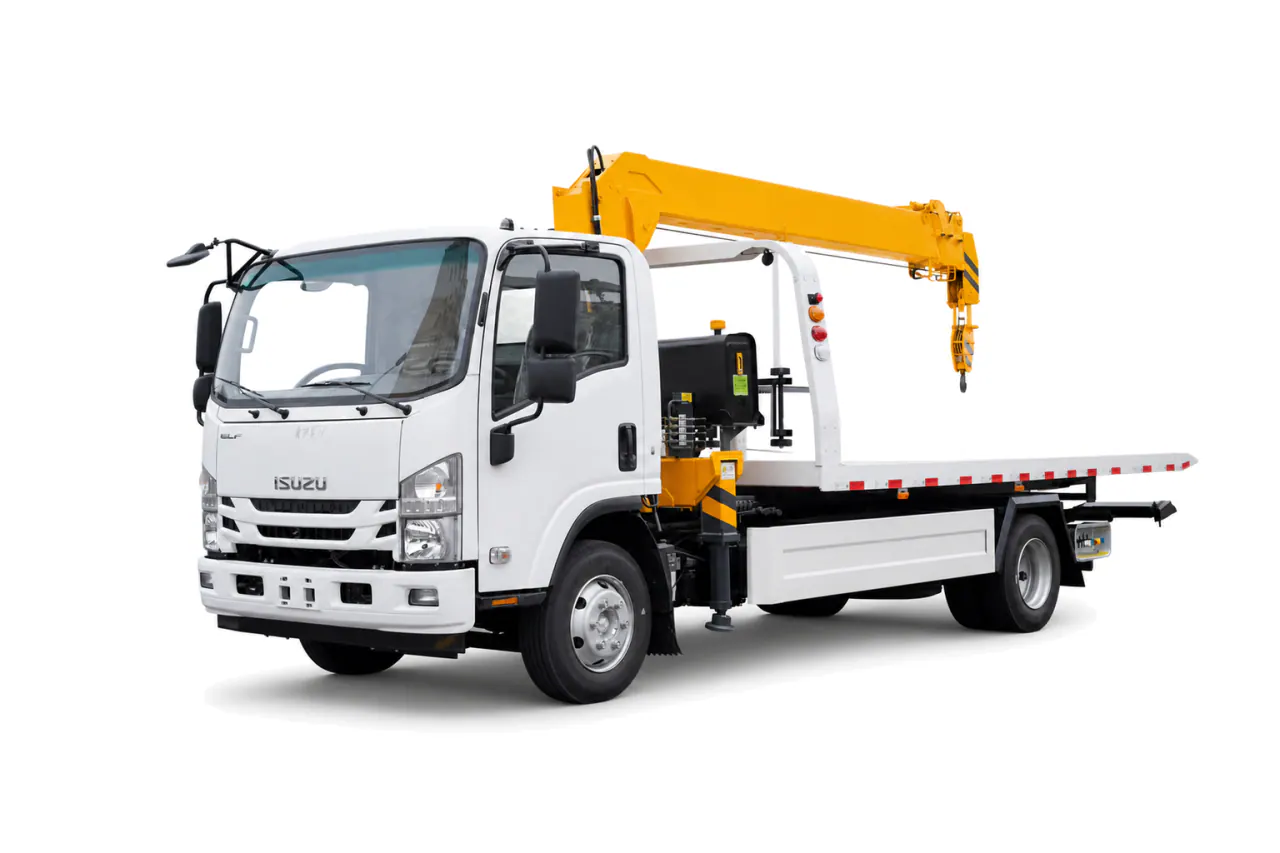 Front three-quarter view of the crane wrecker, showing the yellow crane behind the cab and flat recovery deck (1 of 6)
Technical specifications
| Item | Value |
|---|---|
| Body and layout | |
| Flatbed Length | 4000–7000 mm |
| Equipment and published ratings | |
| Flatbed Load Capacity | 5 t |
| Winch | 4–15 t |
| Rear Tow Boom | 2.5–15 t |
| Crane Type | Telescopic / Knuckle |
| Crane Capacity | Model-specific; confirmed against the installed crane's load chart |
Published configuration range · Data sheet v1.1 · Source checked · Supporting documents
Crane loading and deck payload
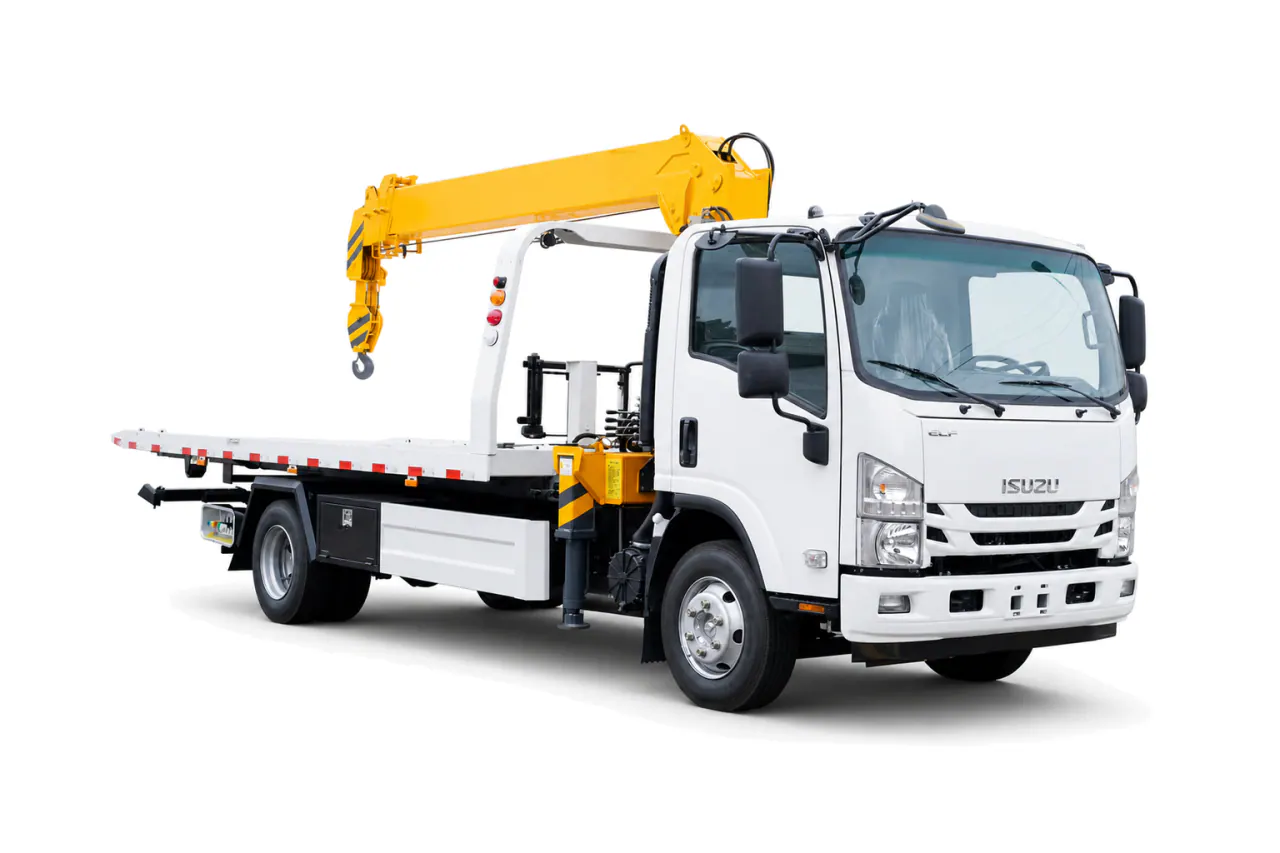
Typical work
- Vehicle loading with self-recovery
- Equipment and machinery handling
- Workshop and municipal recovery
Configuration details
- Crane load chart and reach
- Deck length and loading angle
- Winch, outriggers and recovery tools
- Axle load, payload and stowage
- Casualty and load case
- Describe the target vehicles, axle loads, recovery sequence and restraints.
- Recovery body and equipment
- State deck length, underlift, boom, winch, crane, rigging and control requirements.
- Setup, route and traffic
- Map setup ground, traffic space, route, braking and deployment footprint.
Acceptance requirements
- Reconcile winch, boom, underlift, deck, restraints and accessories to the approved load-case schedule.
- Witness the agreed functions and safety devices without treating a demonstration as a universal capacity proof.
- Record completed-vehicle mass, axle loads, rated documentation, controls, manuals and exceptions.
Build and inspection
Final dimensions, installed equipment, route suitability and acceptance records are confirmed for the selected project.
Combining a crane and flatbed
Do I need a crane as well as the flatbed?
If direct loading meets the task, compare the remaining payload and complexity of a flatbed without a crane. Crane-assisted loading requires a separately assessed lift.
How does the crane affect payload?
The crane, subframe and supports add mass, so use the remaining completed-vehicle payload rather than the original chassis capacity. Assess the crane lift and road carriage separately: a lifting rating does not establish deck payload, or vice versa.
Does a crane test also cover the flatbed?
The deck capacity and final position of the carried load need their own checks. Identify the crane and flatbed separately in the order and inspection records.
Is an underlift supplied?
Only if it appears in the selected build. A crane-assisted flatbed does not automatically include one.
How should the combined installation be recorded for shipping?
Identify deck equipment separately from crane equipment, including loose ramps and attachments. Give the carrier the combined stowed envelope.
Specify your Flatbed Wrecker with Crane
Share the operating duty, destination and equipment requirements.