
Mobile Command Truck
For extended field coordination, plan crew capacity and briefing space around the work. Match communications connections, power and HVAC to the equipment, and agree the deployment sequence.
- Body Dimensions (L × W × H)
- 4–8.5 × 2.2–2.5 × 1.9–2.2 m
- Operator Stations
- 28
- Communications
- 4G/5G; 2–8 VHF/UHF radios; optional satellite
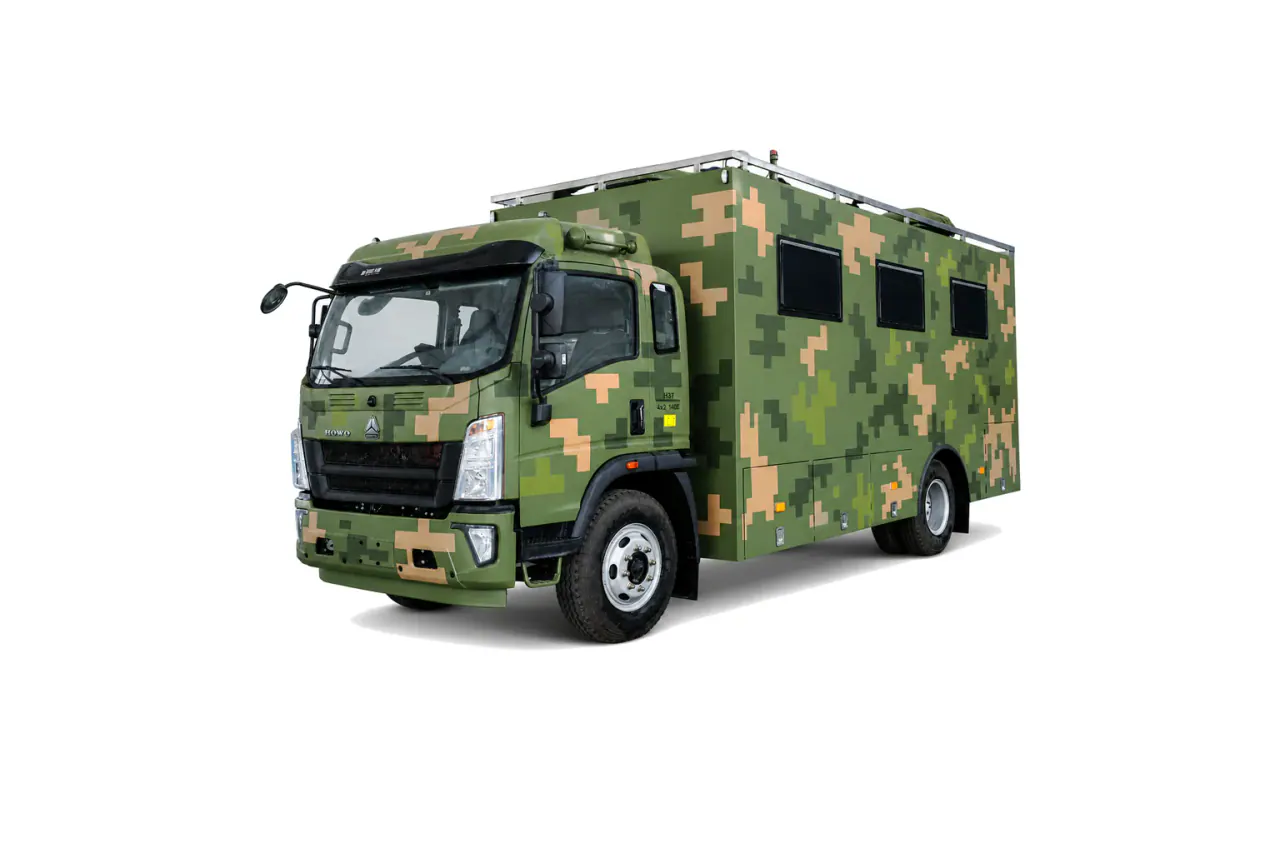 Showing Mobile Command Truck view 1 of 5
Technical specifications
| Item | Value |
|---|---|
| Body Dimensions (L × W × H) | 4–8.5 × 2.2–2.5 × 1.9–2.2 m |
| Operator Stations | 28 |
| Communications | 4G/5G; 2–8 VHF/UHF radios; optional satellite |
| Independent Power | 10–30 kW generator; 1–10 kVA UPS |
| Displays / Video | 32–65 in; 1–3 main and 4–8 workstation displays |
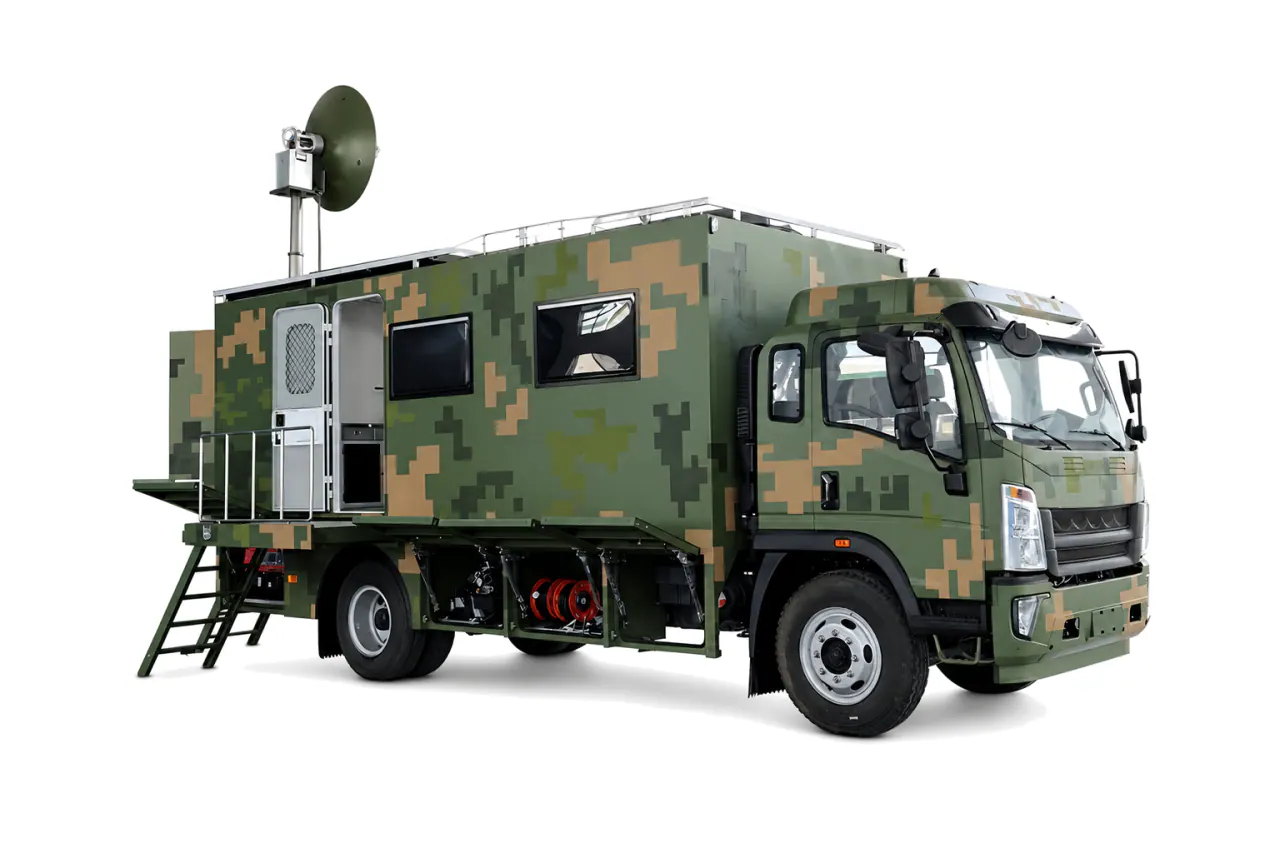
| Telescopic Mast | 6–12 m; optional PTZ / thermal camera |
Configure for your work
Operating roles
- Extended emergency operations
- Event and public-safety coordination
- Remote command posts
Items to specify
- Crew and briefing capacity
- Communications architecture
- Expandable body and deployment sequence
- Generator, HVAC and maintenance access
- Command workflow
- Map agencies, positions, decisions, shift duration and deployment sequence.
- Communications and interfaces
- Name required systems, frequencies or network interfaces where known, and responsibilities.
- Power, cooling and handover
- Provide load schedule, runtime, cooling conditions, deployment and security needs.
Acceptance requirements
- Reconcile radios, network equipment, antennas, operator positions and power systems to the approved schedules.
- Witness power transfer, communications interfaces and agreed interoperability checks without implying network-wide certification.
- Record completed-vehicle mass, axle loads, drawings, software versions, manuals and exceptions.
Build and inspection
Final dimensions, installed equipment, route suitability and acceptance records are confirmed for the selected project.
Buyer questions
Can I combine the generator and UPS ratings?
They describe different functions and should not be added as one continuous power capacity. Review their roles against connected loads.
What determines the command truck’s working capacity?
Specify operator positions and the equipment and interfaces needed for the intended work. Body dimensions alone do not tell you the installed communications capability.
What can a simulated network test confirm?
The results apply to the documented configuration. Record the test limitations; the results do not prove compatibility with every live network.
Why include deployment duration in the brief?
Intended deployment duration informs the specified power and cooling arrangement. Provide it alongside actual equipment loads.
Are masts and antennas included in the base specification?
Check the selected schedule for masts, antennas and other deployed equipment. These items are not implied by the truck description.
What should accompany the communications equipment?
Keep the equipment inventory and supplied configuration records with the handover. Transfer sensitive access details separately.
Specify your Mobile Command Truck
Share the operating duty, destination and equipment requirements.