
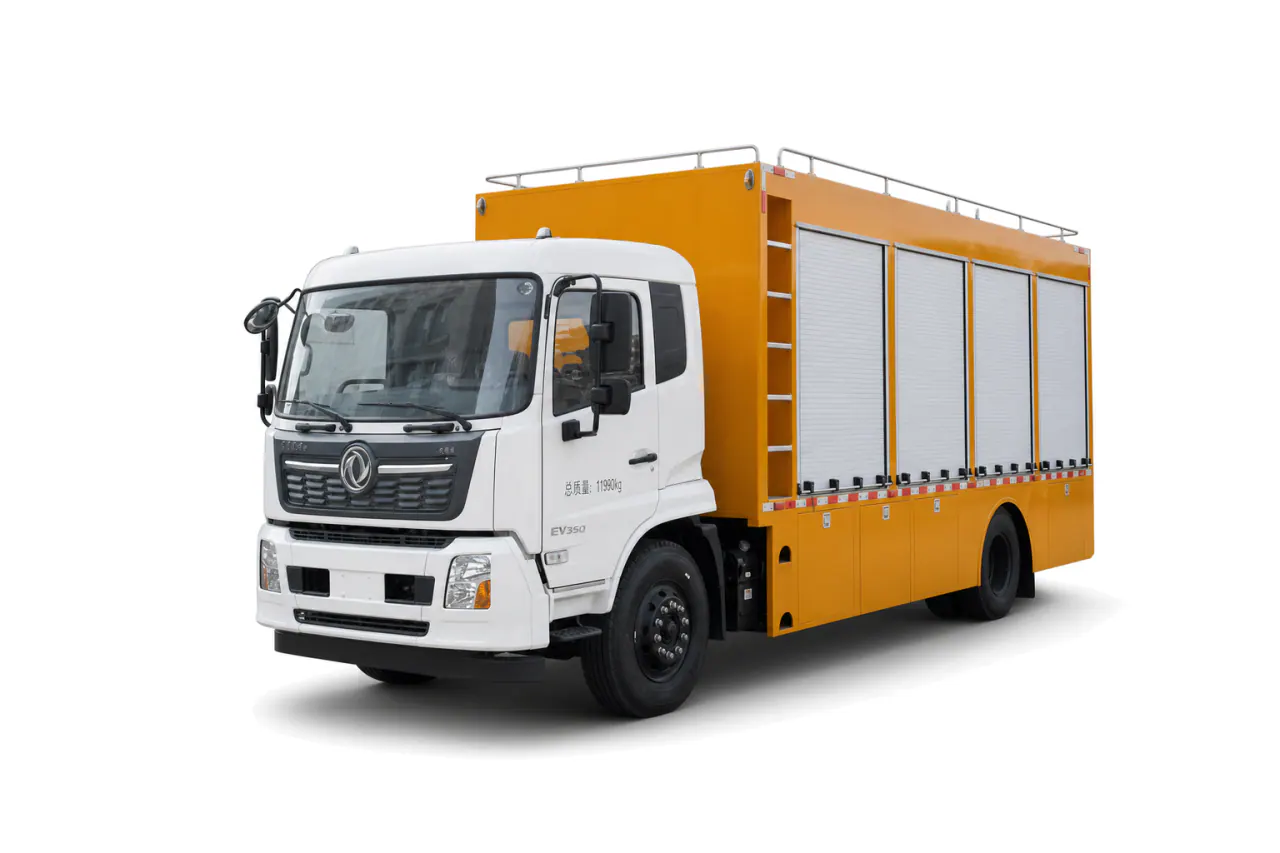
What duty should a support vehicle be specified for?
Specify an emergency support vehicle from the work it must sustain at the site. Mobile power starts with the load schedule, drainage starts with flow at total dynamic head, and a workshop starts with the repairs, tools and consumables the crew must handle.
Separate the support duties
Define power, drainage and field repair separately. Each has its own duty, equipment layout and acceptance method, even when the vehicles support the same operation. Decide whether the project needs one function or a coordinated group of vehicles.
For mobile power, record each item’s continuous and intermittent loads, with its starting demand. Specify voltage, phase and frequency, then the protection and connectors. Cable length and environmental derating must be considered alongside required runtime.
For drainage, state the required flow at total dynamic head and describe the intake condition, including solids. Map the hose route to the discharge point. A mobile workshop needs a repair-task list first; use it to specify tools and a workbench. Add air and welding requirements, then power and storage, with access for servicing.
Design for deployment and service
Work through the crew’s setup sequence for cables and hoses, then intake equipment and tools. Include barrier placement so the drawing shows safe working zones. Check access doors and lifting points, with room to use reels and storage. Lighting and ventilation must suit the work. Account for every item needed during setup, operation, maintenance and pack-down in the equipment schedule.
Review fuel, lubricants, filters, wear parts and routine service needs against the planned deployment duration. Check that the crew can replenish and service the system at the site, and that cooling and guarding suit the deployment. A nameplate capacity does not confirm these conditions.
Check vehicle and site constraints
Include the body, mounted systems, hoses, cables, tools, fuel, crew and loose equipment in the completed mass review. Check axle loads, road limits, turning space and operating footprint. For drainage, confirm intake access and outfall permission. For power, confirm earthing, cable routes and protected distribution. For workshop work, confirm ventilation and safe hot-work controls where applicable.
Information to include in the RFQ
- Required support duty and operating duration
- Load schedule, hydraulic duty or repair-task list
- Site access, climate, ground and route constraints
- Cable, hose, tool, consumable and storage schedule
- Guarding, lighting, ventilation and operator controls
- Duty tests, documents, maintenance and handover records
Inspection and acceptance
Witness the support system at the agreed condition. For power, record load steps, protection and distribution. For drainage, record flow at head and the hose arrangement. For workshop equipment, demonstrate the listed tools and utilities. Verify guards, labels, access and supplied service documents.
Confirm what the power and pump package includes
For mobile power, identify the generator, switchgear, cable reels, connectors and loose distribution equipment in the quotation. Confirm the receiving installation. An engine running without electrical load does not demonstrate the requested supply duty; the agreed record should state load, voltage, frequency and duration. [3]
For drainage, distinguish alternative pump arrangements from pumps supplied to run together. Do not add catalogue alternatives. Ask which pumps the selected generator can operate simultaneously, and identify the hoses, fittings, suction conditions and discharge route used for the flow-and-head check. Free-flow discharge does not establish the rate through the proposed field hose route. [4]
Match the support duty to the mission
Review flood response for drainage and linked support needs, or utility response for access and restoration work. Include only the support roles justified by the operating plan.
Evidence boundary
This guide supports buyer planning. Published specifications do not prove a delivered duty, runtime, stock position or destination approval. Confirm final equipment, site interfaces and acceptance methods in the signed project documents.
Review checklist
- A hydraulic, electrical or repair duty
- A runtime, access and maintenance plan
- A matched equipment and test schedule
Sources
- [1]
- [2]
- [3]Emergency Power Supply Truck | KEEYAK special vehiclesKEEYAK · reviewed 2026-09-07Source retained on file
- [4]Mobile Drainage Pump Truck | KEEYAK special vehiclesKEEYAK · reviewed 2026-09-07Source retained on file
Each source supports only the planning statement that cites it. For the selected vehicle, confirm the destination law and applicable editions, along with the evidence required for that project and jurisdiction.