
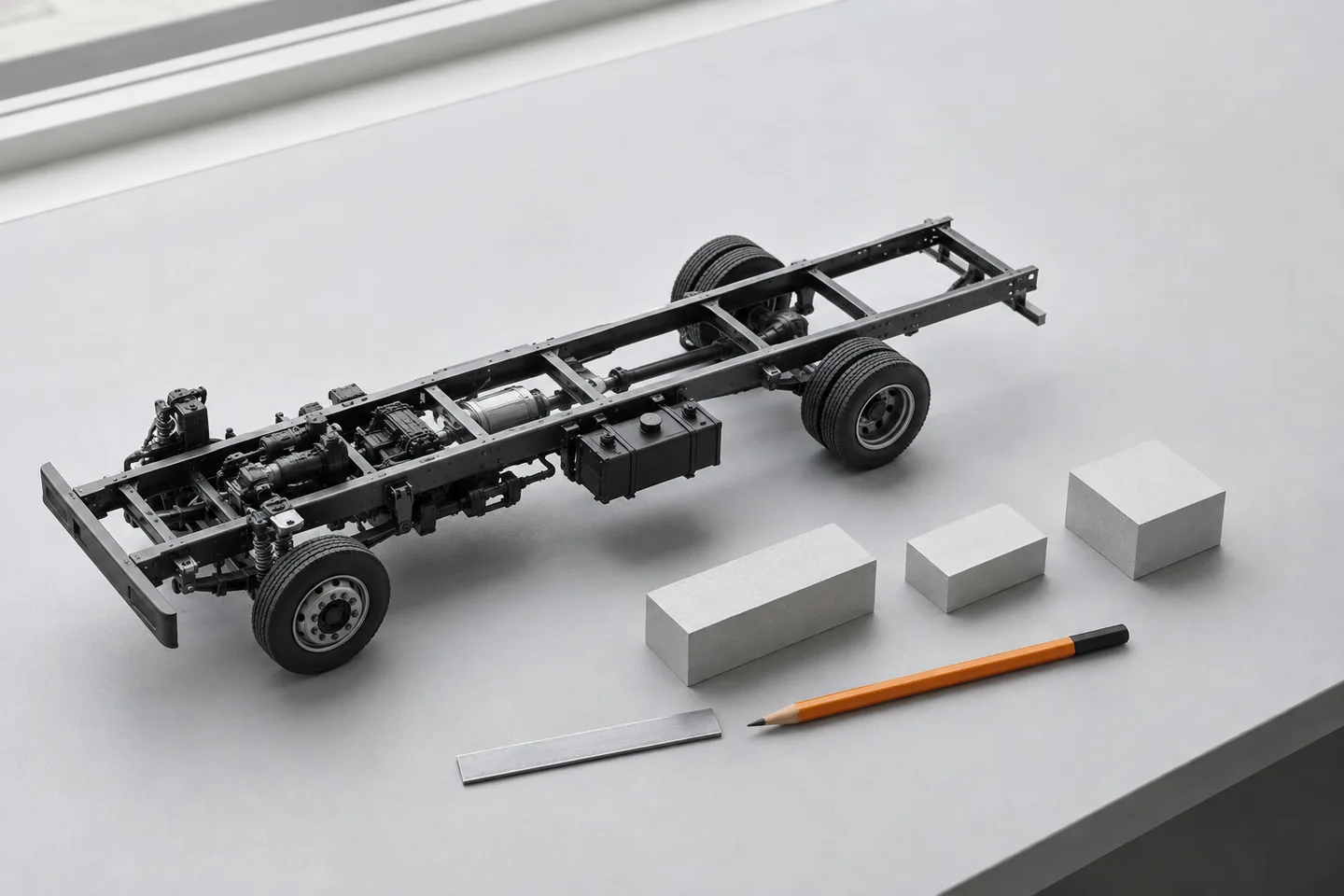
How do you plan chassis capacity and axle loads?
Choose the chassis using the mass and layout of the completed vehicle. Include the body and mounted systems, with fluids, crew, loose equipment and operating payload. Then check axle loads and route limits, as well as the space and support needed to set up at the worksite.
Build the completed mass case
Start with the proposed chassis kerb or curb condition and state what it includes. Account for the body structure and subframe before adding the mounted systems. These may include tanks, pumps, booms, decks, generators, batteries, medical equipment and tools. The operating load also needs to cover fuel and any water or agents carried. Add the crew and their personal equipment, then consumables and other loose items.
Before subtracting catalogue mass figures to estimate payload, check that both figures use compatible definitions. Ask the supplier to show what is included in the completed mass and how much payload remains for the intended operating case.
Check axle loads and load transfer
Total vehicle mass can remain within a limit while one axle is overloaded. Request front and rear axle calculations for transport and operating conditions. Consider tank fill, boom extension, underlift loading, casualty position, crane lift, stabilizer deployment and other cases that move load through the chassis.
Review wheelbase, rear overhang, body length and equipment position together. A longer body can improve storage but may reduce departure angle, turning access or axle reserve. Heavy equipment placed far from an axle can create a larger effect than its mass alone suggests.
Separate road and worksite conditions
Check legal mass and axle limits for the journey, then compare the vehicle dimensions and turning radius with the route. Gradients, bridge limits and overhead clearance also need checking. At the worksite, establish the stabilizer spread and ground reactions for the slope. Check the deck or ramp geometry and leave room for crew access. Plan hose and cable paths within the available traffic space.
Check the journey and the worksite separately. Road legality does not guarantee that the vehicle can deploy at the site, and a suitable working footprint does not resolve bridge, road or destination limits along the route.
Information to request
- Chassis model, wheelbase and mass definition
- Completed mass and axle-load calculation
- Body and equipment layout with centre-of-mass assumptions
- Operational payload and remaining reserve
- Transport dimensions and route constraints
- Stabilizer, boom, deck, tow or pump operating load cases
- Final weighing, drawings and destination documents
Inspection and acceptance
The finished vehicle and its equipment must match the revision used for the load calculation. Record completed mass and axle loads under the agreed condition, and check the dimensions against the access and deployment clearances. Revisit the calculation if the chassis, body or major equipment differs.
Keep a mass and position ledger
For each major item, record mass, mounting position, source document and revision. Include the body, subframe, equipment, operating fluids, crew and loose items without counting anything twice. This follows the main-site distinction between bare-chassis figures and the completed configuration. [3]
Compare relevant loading cases, not only a fully loaded total. Show what changes when a tank empties, equipment moves or a casualty occupies a different position. Link the axle calculation to the wheelbase, rear overhang and body layout on the approved drawing. Update it when a significant item moves or is substituted.
Carry the loading case into the specification
Include the completed mass case and layout revision in the vehicle RFQ. Agree the final weighing and document requirements in the inspection scope; this guide does not approve a payload.
Evidence boundary
This guide explains a planning method. It does not establish legal mass, payload, route approval or chassis suitability for a specific destination. Confirm the final calculation, weighing method and operating cases in the project documents.
Review checklist
- Completed vehicle mass and axle-load calculations
- A route and body-envelope review
- A list of values and records to confirm
Sources
- [1]
- [2]
- [3]Special-Vehicle GVW & Axle Load LimitsKEEYAK · reviewed 2026-09-07Source retained on file
Each source supports only the planning statement that cites it. For the selected vehicle, confirm the destination law and applicable editions, along with the evidence required for that project and jurisdiction.