
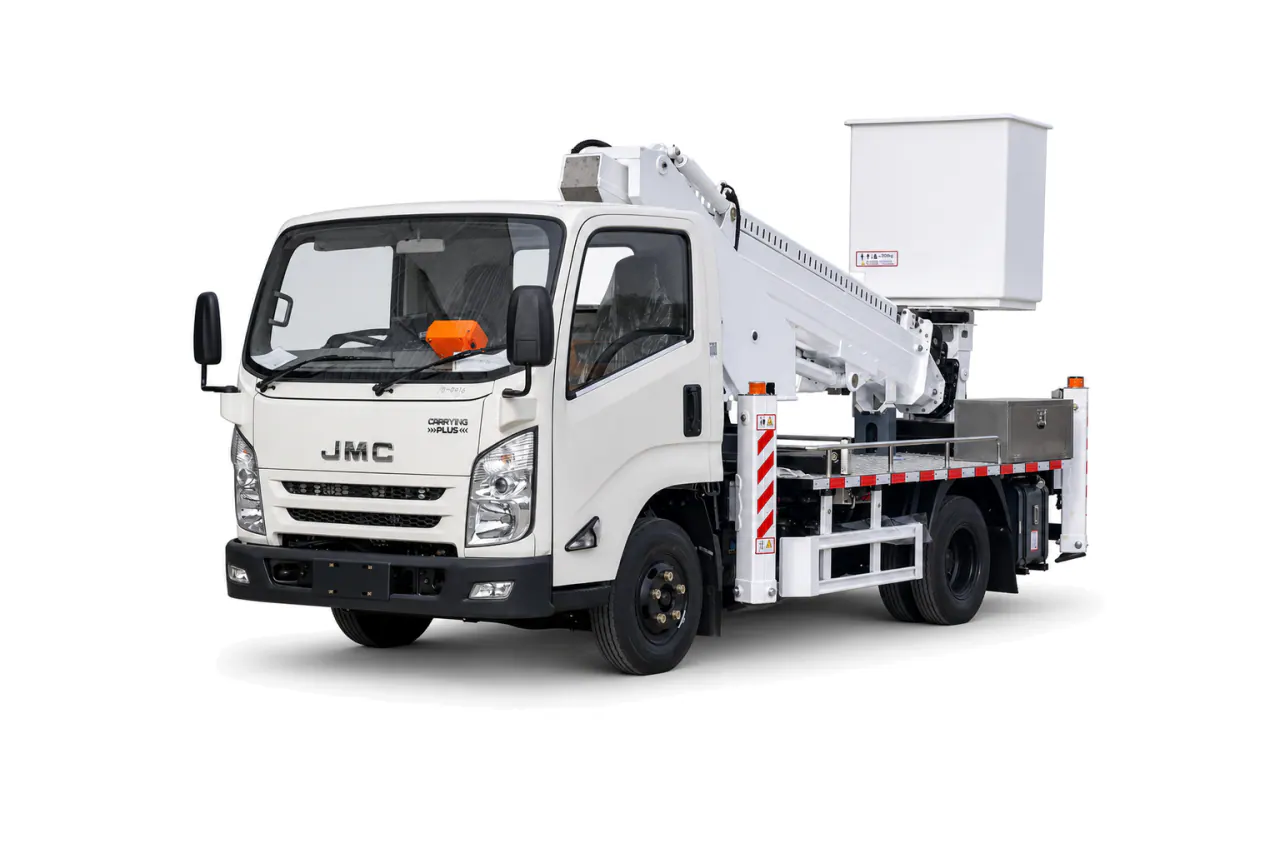
How do you compare aerial access vehicles?
Select an elevated access vehicle from the position the crew must reach, the load in the basket and the obstacles between the vehicle and the work. Maximum height alone cannot show whether the platform can complete the task.
Map the work position
Mark the preferred vehicle position and measure the vertical height and horizontal setback to the work point. Record the dimensions of any obstacles along the reach path. Calculate basket load with the occupants and their tools and materials included, then use the working chart to check that the platform can reach the point at that load.
Choose boom geometry from the reach path. A telescopic boom supports more direct reach. An articulating boom can reach over obstacles. A pickup-mounted platform may suit lighter work and tighter streets when payload allows. A ladder or fire apparatus serves a different access and operating method.
Define insulated or non-insulated duty
Electrical utility work needs a stated insulation class and electrical clearance. Specify the operator procedure and environmental limits, together with the test method and current test basis. An insulated label alone does not supply this information. Keep non-insulated maintenance work in a separate configuration.
For firefighting or evacuation support, define the specific duty. A general aerial work platform does not automatically provide a fire waterway, firefighting controls or casualty-handling approval.
Check setup and transport constraints
Review stabilizer spread, pad size, ground reactions, slope limits and the traffic space needed for deployment. Confirm whether the site can support those reactions. Check overhead hazards, underground services and safe electrical clearances.
For the journey, check completed mass and axle loads against road and bridge limits. Review body height, turning radius and road width along the access route. The working chart may show the required reach, but the vehicle must also be able to enter the site and deploy.
Information to include in the RFQ
- Work-point coordinates, setback and obstacle geometry
- Basket occupants, tools and material load
- Boom type, controls and emergency-lowering method
- Insulation class and verification method where required
- Stabilizer footprint, ground condition and transport route
- Working-chart review, function tests and operator records
Inspection and acceptance
Inspect the platform against the approved drawing and equipment schedule. Witness controls, interlocks, emergency stop, emergency lowering and the agreed reach condition. If insulation is specified, record the applicable test method and result. Keep the test setup linked to the vehicle identity.
Record one achievable work point
Check whether the published height refers to the platform floor or uses a working-height convention that already allows for a person’s reach. Do not add that reach twice. Record height and outreach at the same position and with the intended basket load, including occupants, tools and materials. The maximum height and maximum outreach may occur at different positions. Use the working chart’s datum point for measurement, then check the boom path and tail swing against the basket dimensions. [2]
Review ground support separately. Do not estimate each outrigger reaction by dividing vehicle weight by four; request reactions for the proposed setup and load case. Pad area alone does not establish ground capacity where slopes, voids or underground services affect the site. [3]
Review the worksite and vehicle together
Use the elevated rescue mission to relate vehicle roles to the worksite. Then include the working envelope, setup conditions and required demonstrations in the inspection scope.
Evidence boundary
This guide supports early selection. Project pages preserve the source context of each recorded vehicle. Images and maximum-height values do not prove access, insulation performance, firefighting suitability or destination approval.
Review checklist
- A mapped working envelope
- A record of site and route limits
- Requirements for safety tests, emergency lowering and inspection
Sources
- [1]
- [2]Aerial Truck Working Height & OutreachKEEYAK · reviewed 2026-09-07Source retained on file
- [3]Aerial Truck Chassis & Outrigger FootprintKEEYAK · reviewed 2026-09-07Source retained on file
Each source supports only the planning statement that cites it. For the selected vehicle, confirm the destination law and applicable editions, along with the evidence required for that project and jurisdiction.