
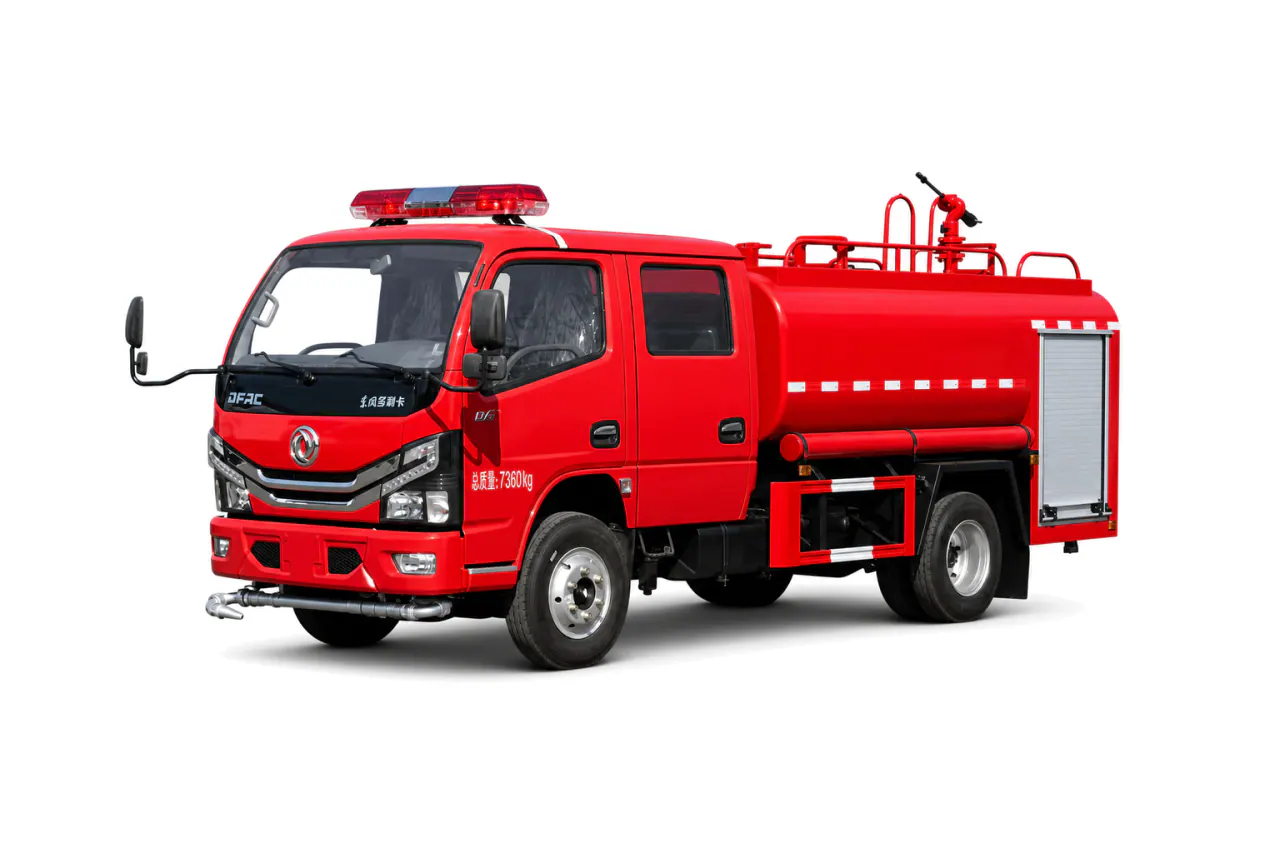
How do you choose a firefighting vehicle?
Start with the fire risk and how the crew will respond. Define the extinguishing agent, water source and discharge duty before comparing chassis and body options. Include route constraints and the acceptance method; tank size alone does not describe the required vehicle.
Define the fire risk and response sequence
Describe the incidents the vehicle will address and the site conditions around them. Structural, vegetation, fuel-storage and industrial process fires can require different agents, application methods and replenishment plans. Identify the first action expected from the crew, the duration of that action and the support available from hydrants, static water, other vehicles or site systems.
For water, foam and dry-powder requirements, name the hazard each system will address and confirm agent compatibility. Keep incompatible duties in separate configurations instead of combining them under a multipurpose label.
Set a measurable operating duty
State pump and monitor requirements at a named flow, pressure and outlet condition. Add operating duration, suction or inlet condition, hose arrangement and refill cycle. A tank volume or monitor range shown in a catalogue does not prove the delivered duty at the scene.
For foam, name the concentrate type and compatible materials. Set the proportioning range for the application point and explain the clean-down requirement. A dry-powder specification needs the agent type and quantity, then storage and pressure requirements. State the nozzle duty and replenishment method.
Check the completed vehicle
Check chassis payload and axle loads with the full body and equipment schedule included. Add the crew and operating water or foam, then tools and hoses with other loose equipment. Compare the loaded vehicle with road width and gradients along the route. Bridge limits and turning space also need checking, including access at the water points.
Lay out crew seating, lockers, hose deployment, pump controls and working areas on the drawing. The arrangement should support the response sequence without blocking access or placing the crew in avoidable conflict with traffic or discharge zones.
Information to include in the RFQ
- Incident types and site hazards
- Water source, refill method and required operating duration
- Pump, monitor, hose, foam or dry-powder duty
- Crew, equipment, storage and warning requirements
- Destination chassis, road and compliance constraints
- Required drawings, certificates, tests and witness records
Ask suppliers to mark each item as included, optional, conditional, excluded or awaiting confirmation. You can then compare the proposed scope item by item, including the conditions behind each stated capacity.
Inspection and acceptance
Agree the test medium, operating condition, instruments, pass criteria and record format before production is complete. Verify vehicle identity, tank and agent system, controls, labels, loose equipment and safety functions against the approved revision. Record exceptions and close them before release or assign an owner and agreed follow-up.
Check the water-supply cycle
Show the refill point, travel route and transfer connection as well as the incident location. A larger tank is useful only if the completed vehicle can reach both ends of that route and connect to the receiving apparatus or storage. KEEYAK’s water-tanker description treats fill and discharge arrangements, loading and access as separate selection inputs. [2]
Ask which tank, pump and monitor are offered together; do not assemble a specification from the maximum value in each catalogue range. Drinking-water transport requires a suitable dedicated configuration rather than an assumed extension of firefighting duty. [2]
Prepare the firefighting RFQ
Carry the hazard, agent duty and replenishment requirements into the vehicle RFQ. Use the firefighting vehicle range to compare body types without treating catalogue ranges as a committed build.
Evidence boundary
This is a buyer-planning guide. Published specifications do not guarantee stock, certification, delivery or field performance. Confirm the selected firefighting system and test method in the signed project documents.
Review checklist
- A defined fire duty and replenishment plan
- A chassis, crew and equipment scope
- A test and evidence list for the quotation
Sources
- [1]
- [2]Water Tanker Fire Truck | KEEYAK special vehiclesKEEYAK · reviewed 2026-09-07Source retained on file
Each source supports only the planning statement that cites it. For the selected vehicle, confirm the destination law and applicable editions, along with the evidence required for that project and jurisdiction.